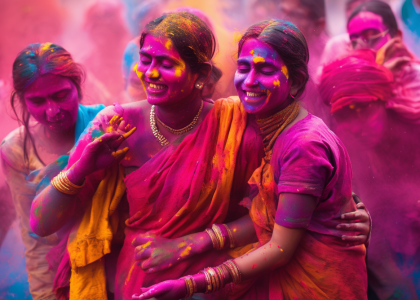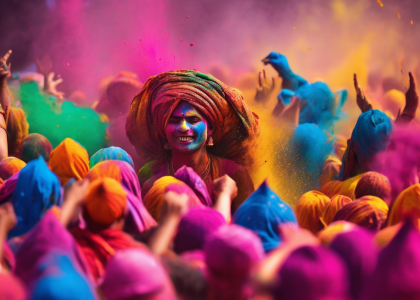
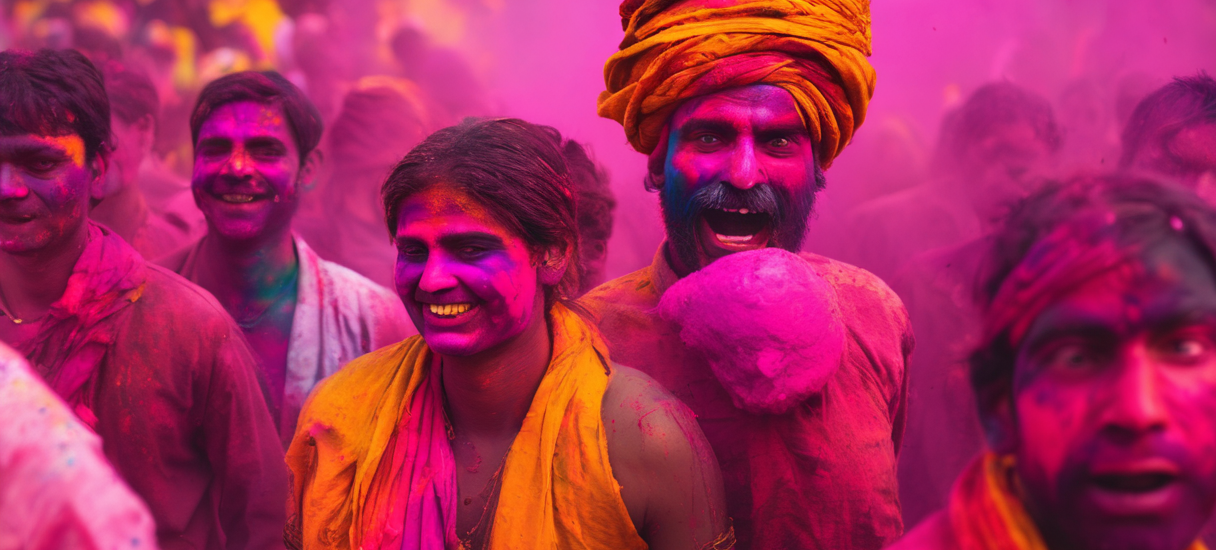
Holi, also known as the “Festival of Colors”, is one of the most vibrant and widely celebrated festivals in India. It is a spring festival that is primarily observed in the Indian subcontinent and is also popularly celebrated in countries with large Hindu, Sikh, and Buddhist populations. The origin of Holi can be traced back to ancient Hindu mythology and has evolved over thousands of years through various cultural, religious, and social influences.
The legend behind the festival of Holi stems from Hindu mythology and has different versions depending on the region and community. According to one popular story, Holi celebrates the victory of good over evil through the triumph of the Hindu god, Vishnu, over the demon king, Hiranyakashipu. Another legend associates Holi with the love story of Lord Krishna and Radha. It is said that Krishna, known for his mischievous pranks, playfully applied color on his beloved Radha and their love became immortalized through the festival of Holi.
The tradition of Holi has evolved over the years and has been influenced by different cultures and religions. The festival is celebrated in many forms, including musical gatherings, dance performances, and street celebrations. Today, Holi has become a symbol of unity, joy, and diversity, as people of all ages, backgrounds, and walks of life come together to celebrate the festival of colors.